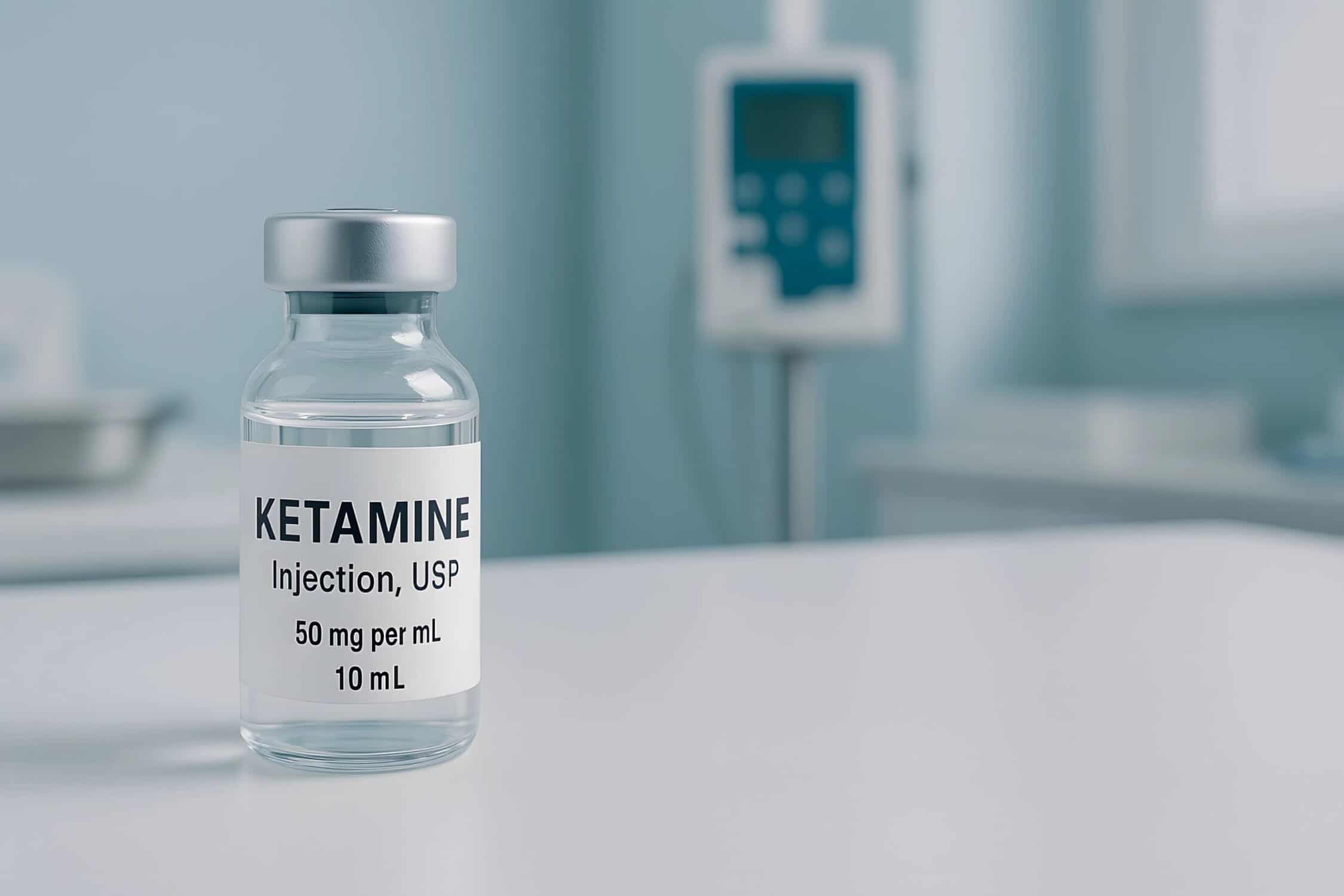
At Modern Therapy Group, we want to be clear: The truth is that ketamine infusion therapy, when administered in clinical settings under medical supervision, is very different from recreational ketamine abuse. Let’s break down how ketamine therapy works, whether ketamine therapy is safe, and what patients can actually expect during a ketamine therapy session.
Benefits of Ketamine Therapy
Before we dive deeper into the ins and outs of ketamine therapy, it is important to understand where it stemmed from. For individuals struggling with depression, anxiety, PTSD, or chronic pain, traditional treatments don’t always provide relief. Ketamine treatment offers a new path forward, working through different brain pathways than standard antidepressants and often producing faster results.
How Ketamine Infusion Therapy Works
Unlike conventional medications that can take weeks to show improvement, ketamine works by stimulating glutamate production and enhancing neuroplasticity, the brain’s ability to form new neural connections. This process helps patients break free from entrenched patterns of negative thinking and supports healthier mood regulation.
Clinical trials and ongoing research show that ketamine treatment can reduce depression symptoms and even alleviate suicidal ideation in patients who haven’t responded to other treatments.
- Most patients receive six to eight sessions of ketamine infusion therapy over several weeks.
- Many patients report noticeable improvements in mood, self-awareness, and their overall healing journey.
- The therapeutic benefits often appear much faster than with traditional antidepressants, making ketamine an effective treatment for severe or urgent cases.
FDA Approval and Clinical Use
While recreational use of ketamine is unsafe, administering ketamine in a clinical setting is FDA-approved for certain forms of treatment-resistant depression. Under professional supervision, ketamine therapy has been shown to treat depression and related mental health conditions effectively, even when other medications have failed.
Key Benefits Patients May Experience
- Rapid relief from depressive symptoms, sometimes within hours or days
- Reduction in anxiety, PTSD, and chronic pain symptoms
- Improved focus, clarity, and emotional stability
- Long-term mood improvement with follow-up treatments
- Greater openness to psychotherapy when combined with talk therapy

Conditions Ketamine Can Treat
When administered in a controlled environment, ketamine therapy has shown promising results for a range of mental health conditions. While some patients may experience temporary side effects, such as blurred vision or mild hallucinations, these are closely monitored and managed by licensed professionals to minimize any adverse effects.
Depression & Treatment-Resistant Depression
One of the most well-researched applications of ketamine therapy is its ability to treat depression, including cases that have not responded to traditional medications. In fact, systematic and scoping review evidence highlights ketamine as one of the most effective options for individuals facing treatment-resistant depression.
Anxiety Disorders
For those struggling with anxiety disorders, ketamine infusion or nasal spray treatments can help ease intrusive worry, panic symptoms, and physical tension. Many patients report improved well-being within days, compared to the longer wait times associated with standard medications.
Post-Traumatic Stress Disorder (PTSD)
PTSD symptoms can be especially resistant to traditional therapy. Ketamine works on different brain pathways, helping patients process trauma more effectively while reducing hyperarousal, flashbacks, and emotional numbing.
Is Ketamine Therapy Safe?
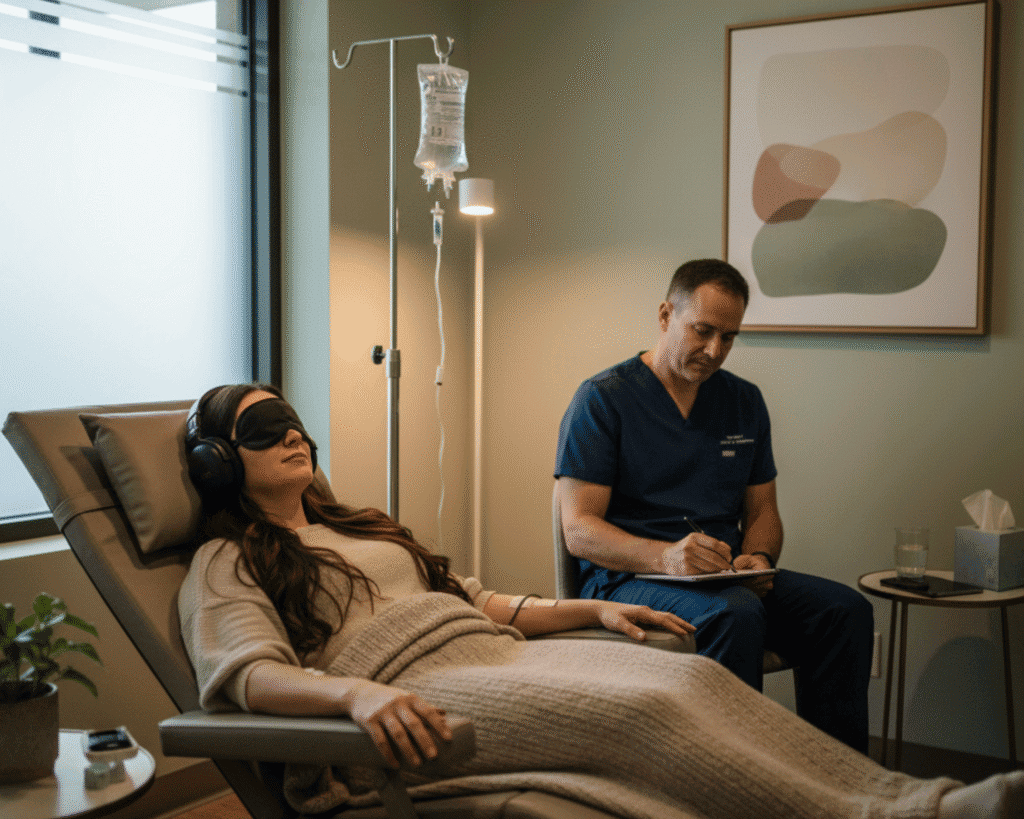
At Modern Therapy Group, ketamine therapy is never a one-size-fits-all approach. We provide carefully controlled doses of ketamine through IV infusions, nasal spray, or injections, always monitored by licensed professionals. This ensures safety, comfort, and the best possible outcomes for each patient’s mental health and well-being.
Patients often wonder if ketamine infusion causes the same effects as recreational ketamine. The answer: not exactly.
- In medical treatment, low doses are used specifically for therapeutic benefits, while doses remain carefully controlled to prevent intoxication or misuse.
- Reputable clinics screen for potential risks, like high blood pressure or interactions with other medications.
- Sessions are guided by a mental health provider, ensuring that both physical and emotional responses are managed.
- Patients may feel a mild sense of dissociation or a dream-like state, sometimes described as light hallucinations, blurred vision, or feeling detached.
- These sensations are temporary and fade quickly after the ketamine therapy session ends.
While these effects can feel unusual, they are not the same as the “high” sought in recreational ketamine abuse. Instead, they are part of how ketamine works as an NMDA receptor antagonist to create rapid acting antidepressant effects.
Is Ketamine Addictive?
A common concern patients have is: does ketamine therapy carry the risk of addiction? The answer depends heavily on the setting, dosage, and purpose of use.
Recreational Use vs. Medical Treatment
In recreational contexts, ketamine is sometimes misused at high doses, leading to dependency, bladder problems, and other health complications. This form of ketamine abuse is very different from the therapeutic approach used in a doctor’s office or specialized clinic.
Risk of Addiction in Clinical Settings
When ketamine is administered in a doctor’s office or clinic by trained professionals, the risk of addiction is extremely low. The treatment process includes strict screening protocols, regulated dosing schedules, and ongoing evaluation of patient progress. This structured approach minimizes adverse effects and dependency risks.
Research on How Ketamine Therapy Works
Current evidence shows that while recreational ketamine use can lead to dependence, ketamine therapy does not appear addictive when administered responsibly in medical settings. Ongoing studies and scoping reviews continue to examine long-term outcomes, helping mental health providers refine best practices and ensure patient safety.

Frequently Asked Questions About Ketamine Therapy
When it comes to innovative mental health treatments, it’s natural to have questions. Here are some of the most frequently asked questions about ketamine therapy, especially around its safety, effects, and how it differs from recreational use.
No. In a clinical setting, ketamine is given in low doses that do not cause intoxication. Patients may feel a mild, dream-like state or temporary dissociation, but this is very different from the euphoric “high” associated with recreational misuse. These sensations fade quickly and are carefully managed in a controlled environment by licensed professionals.
Some patients report light hallucinations, blurred vision, or feeling detached from their surroundings. Others describe it as a sense of calm or floating. These experiences are short-lived and part of how ketamine works in the brain to reduce symptoms of depression and anxiety.
Yes. Sessions take place in a doctor’s office or clinic, where providers monitor patient’s vital signs like blood pressure and heart rate. The medication is always administered by trained professionals to reduce the risk of adverse effects.
Yes. In addition to treatment-resistant depression, ketamine therapy has shown promise for anxiety disorders, PTSD, OCD, bipolar disorder, and chronic pain. Ongoing scoping review evidence continues to highlight its benefits across a variety of mental health conditions.
Depending on your treatment plan, ketamine may be provided through an IV infusion (ketamine infusion therapy), a nasal spray (FDA-approved for depression), or an injection. Your provider will determine the best method for your needs.

Ketamine Assisted Psychotherapy: Safe, Supervised, and Effective
Does ketamine therapy get you high? Not in the way recreational ketamine does. During treatment, patients may experience brief dissociation or a dream-like state, but these effects are carefully monitored and are part of the therapeutic process.
In licensed, reputable clinics, ketamine-assisted psychotherapy is a safe and effective treatment for a range of mental health conditions, including severe depression and post-traumatic stress disorder. Administered under professional supervision, it provides targeted relief while supporting overall mental health and well-being.
At Modern Therapy Group, we provide mental health treatment in controlled settings, ensuring patient safety while helping individuals find relief from mental health challenges. If you’ve been struggling with treatment resistant depression or other conditions, ketamine therapy may be an option worth exploring. Ready to see if ketamine therapy is the right fit for you? Contact us today to learn more.
Sources
Drozdz, S. J., Goel, A., McGarr, M. W., Katz, J., Ritvo, P., Mattina, G. F., Bhat, V., Diep, C., & Ladha, K. S. (2022). Ketamine assisted psychotherapy: A systematic narrative review of the literature. Journal of Pain Research, 15, 1691–1706.
Lascelles, K., Marzano, L., Brand, F., Trueman, H., McShane, R., & Hawton, K. (2020). Ketamine treatment for individuals with treatment-resistant depression: Longitudinal qualitative interview study of patient experiences. BJPsych Open, 7(1), e9.
Sobule, R., & Ithman, M. (2023). Ketamine: Studies show benefit. Missouri Medicine, 120(1), 29–30.
Walsh, Z., Mollaahmetoglu, O. M., Rootman, J., Golsof, S., Keeler, J., Marsh, B., Nutt, D. J., & Morgan, C. J. A. (2021). Ketamine for the treatment of mental health and substance use disorders: Comprehensive systematic review. BJPsych Open, 8(1), e19.